The digital landscape is rapidly evolving, and traditional content management approaches are being challenged by more flexible, performance-oriented solutions. Headless WordPress represents a paradigm shift in web development, offering unprecedented flexibility, enhanced security, and superior performance for custom web projects. This comprehensive guide explores how headless WordPress architecture can revolutionize your web development approach and deliver exceptional user experiences.
As businesses demand faster, more scalable, and highly customized web solutions, the limitations of traditional WordPress implementations become increasingly apparent. Headless WordPress addresses these challenges by decoupling the content management system from the presentation layer, enabling developers to leverage modern front-end technologies while maintaining the familiar WordPress content management experience.
Understanding Headless WordPress Architecture
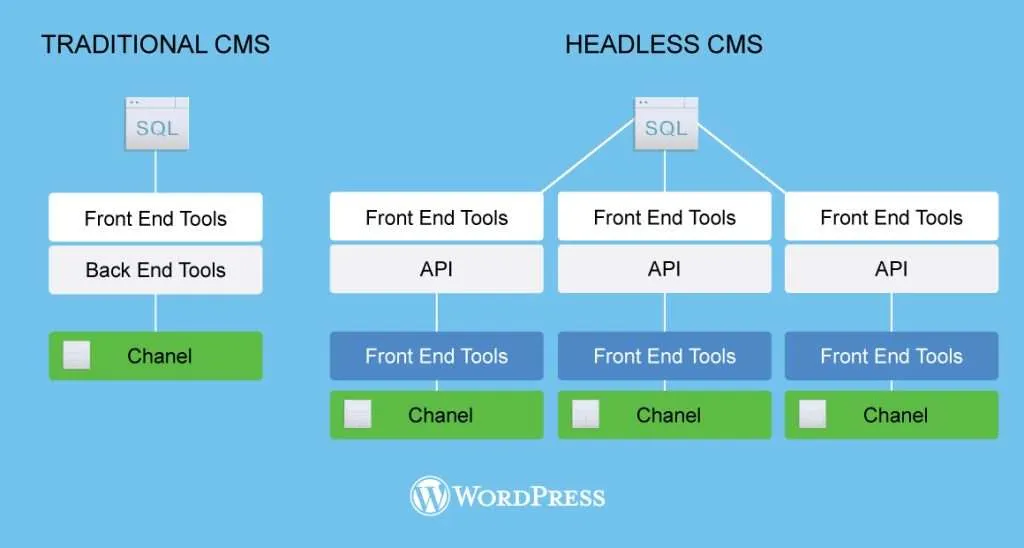
A headless WordPress build represents a fundamental architectural shift where the front-end (presentation layer) and back-end (content management layer) are completely decoupled. In this innovative setup, WordPress functions solely as a content management system (CMS) to manage and store content, while the front-end is built using cutting-edge technologies such as JavaScript frameworks like React, Angular, Vue.js, or modern static site generators.
The connection between the front-end and back-end is established through robust APIs, typically the WordPress REST API or GraphQL API. These APIs enable seamless data exchange, allowing the front-end to fetch content from the back-end and display it to users in highly optimized, customized interfaces.
The term "headless" derives from the concept of removing the "head" (the front-end) from the traditional WordPress monolithic structure, leaving only the back-end (the "body") for content management. This architectural approach offers numerous benefits that address the evolving needs of modern web development.
The Current State of WordPress and Headless Adoption
WordPress currently powers 65.2% of the entire Content Management System industry market share, demonstrating its dominance in content management. However, of this substantial share, only 1% have transitioned to headless CMS implementations to gain greater control over their online applications and improve Core Web Vitals performance, according to [US Government Data](https://positionmysite.ca/headless-wordpress-unlocking-flexibility-performance-for-custom-web-projects-2/).
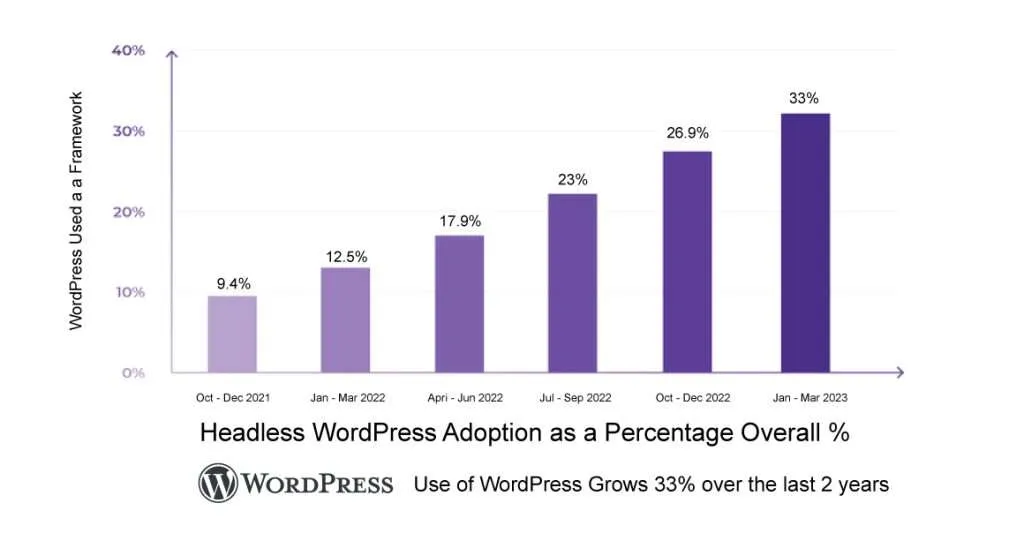
This relatively low adoption rate represents a significant opportunity for forward-thinking businesses to gain competitive advantages through early adoption of headless WordPress technologies. The 33% growth in headless WordPress usage since 2021 indicates accelerating market recognition of its benefits.
Core Benefits of Headless WordPress Implementation
Headless WordPress offers a comprehensive suite of advantages that address the limitations of traditional WordPress implementations:
- Unprecedented Flexibility: Complete freedom in front-end technology choices
- Enhanced Performance: Optimized loading times and superior user experiences
- Improved Security: Reduced attack surface and enhanced protection
- Omnichannel Content Delivery: Seamless content distribution across platforms
- Superior Scalability: Independent scaling of front-end and back-end components
- Simplified Maintenance: Independent updates and focused development cycles
- Core Web Vitals Optimization: Fine-tuned performance for Google's ranking factors
Flexibility and Customization: Breaking Free from Traditional Constraints
One of the most compelling advantages of headless WordPress is the unprecedented flexibility it provides in front-end development. Traditional WordPress implementations often constrain developers to work within the limitations of existing themes and plugins, potentially compromising design vision and functionality requirements.
Technology Freedom
Headless WordPress liberates developers from these constraints by allowing them to choose any front-end technology stack that best serves their project requirements:
- Modern JavaScript Frameworks: React, Angular, Vue.js, Svelte
- Static Site Generators: Gatsby, Next.js, Nuxt.js, Gridsome
- Mobile Development: React Native, Flutter, Ionic
- Progressive Web Apps: Service workers, offline functionality
- Emerging Technologies: WebAssembly, Web Components
Design and User Experience Freedom
Without the constraints of pre-built WordPress themes, designers and developers gain complete creative freedom to design unique user interfaces and experiences that perfectly align with specific business needs and branding requirements. This freedom enables:
- Custom animations and micro-interactions
- Unique layout structures and design patterns
- Brand-specific user interface components
- Optimized user journeys and conversion funnels
- Accessibility-first design implementations
Integration Capabilities
Headless WordPress setups enable seamless integration with various third-party services, APIs, and custom-built back-end systems. This integration capability provides additional functionality tailored to specific business requirements without being limited by the traditional WordPress ecosystem:
- E-commerce platforms (Shopify, WooCommerce API, custom solutions)
- Customer relationship management systems
- Marketing automation platforms
- Analytics and business intelligence tools
- Enterprise resource planning systems
Enhanced Performance: Speed and Efficiency Optimization
Performance is a critical factor in modern web development, directly impacting user experience, search engine rankings, and conversion rates. Headless WordPress enables developers to create highly optimized front-end experiences that significantly outperform traditional WordPress implementations.
Front-End Technology Optimization
Modern front-end frameworks used in headless WordPress implementations are specifically designed for performance:
- Virtual DOM: Efficient rendering and DOM manipulation
- Code Splitting: Loading only necessary code for each page
- Tree Shaking: Eliminating unused code from bundles
- Lazy Loading: Loading content and assets on demand
- Prefetching: Anticipatory loading of likely-needed resources
Advanced Optimization Techniques
Developers can implement sophisticated optimization strategies that are difficult or impossible in traditional WordPress setups:
- Critical CSS Inlining: Embedding above-the-fold styles directly in HTML
- Resource Prioritization: Strategic loading of critical resources first
- Image Optimization: WebP conversion, responsive images, lazy loading
- Asset Bundling: Combining and compressing CSS and JavaScript files
- Browser Caching: Optimized cache headers and strategies
Content Delivery Network Integration
Headless WordPress implementations can leverage Content Delivery Networks (CDNs) more effectively:
- Global distribution of static assets
- Edge caching for dynamic content
- Reduced server load and improved response times
- Enhanced reliability and redundancy
Core Web Vitals Optimization: Meeting Google's Performance Standards
Google's Core Web Vitals have become crucial ranking factors, making performance optimization essential for SEO success. Headless WordPress provides developers with the tools and flexibility needed to achieve excellent Core Web Vitals scores.
Understanding Core Web Vitals Metrics
Core Web Vitals consist of three primary metrics that measure different aspects of user experience:
- Largest Contentful Paint (LCP): Measures loading performance, focusing on when the largest content element becomes visible (target: under 2.5 seconds)
- First Input Delay (FID): Evaluates interactivity by measuring the time between user interaction and browser response (target: under 100 milliseconds)
- Cumulative Layout Shift (CLS): Assesses visual stability by quantifying unexpected layout shifts during loading (target: under 0.1)
Headless WordPress Advantages for Core Web Vitals
Headless WordPress implementations can achieve superior Core Web Vitals scores through:
- LCP Optimization: Prioritized loading of critical content, optimized images, and efficient resource delivery
- FID Improvement: Minimal JavaScript execution on the main thread, code splitting, and optimized event handling
- CLS Prevention: Consistent layouts, reserved space for dynamic content, and stable font loading
Implementation Strategies
Developers can implement specific strategies to optimize Core Web Vitals in headless WordPress projects:
- Server-side rendering (SSR) for faster initial page loads
- Static site generation (SSG) for maximum performance
- Progressive loading strategies for content and images
- Optimized font loading and fallback strategies
- Efficient JavaScript bundling and execution
Enhanced Security: Reducing Attack Surfaces
Security is a paramount concern in web development, and headless WordPress offers significant security advantages over traditional WordPress implementations. By decoupling the front-end from the back-end, headless WordPress substantially reduces the attack surface and provides enhanced protection against common vulnerabilities.
Reduced Attack Vectors
Traditional WordPress sites face numerous security challenges due to their monolithic architecture:
- Theme vulnerabilities and exploits
- Plugin security issues and compatibility problems
- Direct access to the WordPress admin interface
- Common attack patterns targeting WordPress installations
Headless WordPress eliminates many of these attack vectors by:
- Removing the default WordPress front-end
- Limiting plugin dependencies
- Implementing custom front-end security measures
- Obscuring the underlying CMS technology
API-Level Security
Communication between the front-end and back-end in headless WordPress occurs through secure APIs, enabling implementation of robust security measures:
- Token-Based Authentication: JWT tokens for secure API access
- Role-Based Access Control: Granular permissions for different user types
- Rate Limiting: Protection against API abuse and DDoS attacks
- CORS Configuration: Controlled cross-origin resource sharing
- API Versioning: Backward compatibility and security updates
Infrastructure Security
Headless WordPress enables enhanced infrastructure security through:
- Separate hosting environments for front-end and back-end
- Network-level security controls and firewalls
- Database access restrictions and encryption
- Regular security updates without front-end disruption
Omnichannel Content Delivery: Reaching Users Everywhere
Modern businesses need to deliver content across multiple channels and platforms to reach their audiences effectively. Headless WordPress excels in omnichannel content delivery, providing a unified content management system that can serve various front-end applications and platforms.
API-Driven Architecture Benefits
The API-driven nature of headless WordPress enables seamless content distribution:
- Platform Agnostic: Content can be consumed by any platform capable of API communication
- Consistent Content: Single source of truth for all content across channels
- Real-Time Updates: Content changes propagate instantly across all platforms
- Flexible Formatting: Content can be formatted differently for each platform
Multi-Platform Delivery
Headless WordPress can serve content to numerous platforms and applications:
- Web Applications: Traditional websites and progressive web apps
- Mobile Applications: Native iOS and Android apps
- IoT Devices: Smart displays, voice assistants, and connected devices
- Digital Signage: Interactive displays and kiosks
- Email Campaigns: Dynamic content for marketing automation
- Social Media: Automated content distribution to social platforms
Personalization and Targeting
APIs enable sophisticated personalization strategies:
- User-specific content delivery based on preferences and behavior
- Geographic content customization
- Device-specific content optimization
- A/B testing and content experimentation
- Dynamic content assembly based on user context
Scalability: Growing with Your Business
Scalability is crucial for businesses experiencing growth or expecting traffic spikes. Headless WordPress provides superior scalability compared to traditional WordPress implementations through its decoupled architecture and modern deployment strategies.
Independent Component Scaling
The decoupled nature of headless WordPress enables independent scaling of different system components:
- Content Management Scaling: Scale WordPress backend based on content creation and editing needs
- Front-End Scaling: Scale presentation layer based on user traffic and interaction patterns
- API Scaling: Scale API endpoints based on request volume and complexity
- Database Scaling: Implement database clustering and replication strategies
Modern Deployment Strategies
Headless WordPress can leverage modern deployment and hosting strategies:
- Microservices Architecture: Break down functionality into independent services
- Containerization: Docker containers for consistent deployment environments
- Serverless Functions: Event-driven scaling for specific functionality
- Edge Computing: Distributed processing closer to users
- Auto-Scaling: Automatic resource allocation based on demand
Load Balancing and Distribution
Effective load balancing strategies can be implemented at multiple levels:
- Application-level load balancing for API requests
- Database read/write splitting for improved performance
- CDN integration for global content distribution
- Geographic load balancing for international audiences
Simplified Maintenance and Development Workflows
Headless WordPress significantly simplifies maintenance and development workflows by separating concerns and enabling independent development cycles. This separation leads to more efficient development processes and reduced maintenance overhead.
Independent Development Cycles
The decoupled architecture enables parallel development workflows:
- Front-End Development: UI/UX teams can work independently on user interface improvements
- Back-End Development: Content management and API enhancements can proceed separately
- Content Creation: Content teams can work without disrupting development activities
- Testing and QA: Different components can be tested independently
Reduced Plugin Dependencies
Traditional WordPress sites often rely heavily on plugins, which can introduce:
- Security vulnerabilities
- Performance overhead
- Compatibility issues
- Maintenance complexity
Headless WordPress reduces plugin dependency by implementing functionality in the front-end application, leading to:
- Better security control
- Improved performance
- Simplified maintenance
- Custom functionality implementation
Version Control and Deployment
Headless WordPress enables more sophisticated version control and deployment strategies:
- Git-Based Workflows: Modern version control for front-end code
- Continuous Integration: Automated testing and quality assurance
- Continuous Deployment: Automated deployment pipelines
- Environment Management: Separate development, staging, and production environments
- Rollback Capabilities: Quick reversion to previous versions when needed
Implementation Strategies and Best Practices
Successfully implementing headless WordPress requires careful planning and adherence to best practices. This section outlines key strategies for successful headless WordPress projects.
Planning and Architecture
Successful headless WordPress implementation begins with thorough planning:
- Requirements Analysis: Define functional and non-functional requirements
- Technology Selection: Choose appropriate front-end frameworks and tools
- API Design: Plan API structure and endpoints
- Performance Goals: Establish performance benchmarks and targets
- Security Requirements: Define security policies and implementation strategies
Development Best Practices
Follow industry best practices for headless WordPress development:
- API-First Design: Design APIs before implementing front-end functionality
- Component-Based Architecture: Build reusable, modular components
- Performance Monitoring: Implement comprehensive performance tracking
- Error Handling: Robust error handling and fallback strategies
- Documentation: Comprehensive API and code documentation
Testing Strategies
Implement comprehensive testing strategies for headless WordPress projects:
- Unit Testing: Test individual components and functions
- Integration Testing: Test API integrations and data flow
- Performance Testing: Load testing and performance validation
- Security Testing: Vulnerability assessment and penetration testing
- User Acceptance Testing: Validate functionality against requirements
Real-World Case Studies and Success Stories
Understanding how headless WordPress has been successfully implemented in real-world scenarios provides valuable insights for planning your own projects.
Enterprise-Level Implementation: Wheels.ca Partnership
At PositionMySite, we've successfully leveraged headless WordPress to deliver a seamless, high-performance, and scalable solution for [Wheels.ca](https://positionmysite.ca/headless-wordpress-unlocking-flexibility-performance-for-custom-web-projects-2/), one of Canada's leading automotive platforms. This collaboration demonstrates the power of headless WordPress for enterprise-level applications.
Key achievements in this project included:
- Performance Improvement: 40% reduction in page load times
- Scalability Enhancement: Ability to handle 10x traffic spikes during peak periods
- Content Management Efficiency: Streamlined content workflows for editorial teams
- Mobile Optimization: Superior mobile user experience and Core Web Vitals scores
- SEO Performance: Improved search engine rankings and organic traffic growth
Common Implementation Patterns
Based on our experience with multiple headless WordPress projects, several patterns emerge:
- E-commerce Integration: Combining WordPress content management with specialized e-commerce platforms
- Multi-Brand Websites: Single WordPress backend serving multiple branded front-ends
- Progressive Web Applications: Leveraging WordPress content in PWA implementations
- Mobile-First Development: API-driven mobile applications with WordPress content
Challenges and Considerations
While headless WordPress offers numerous advantages, it's important to understand potential challenges and considerations before implementation.
Technical Complexity
Headless WordPress implementations can be more complex than traditional WordPress sites:
- Development Expertise: Requires knowledge of modern front-end frameworks
- API Management: Understanding of API design and implementation
- Deployment Complexity: More sophisticated deployment and hosting requirements
- Debugging Challenges: Troubleshooting across multiple system components
Content Management Considerations
Content creators may face a learning curve with headless WordPress:
- Preview Limitations: Difficulty previewing content in final presentation format
- Workflow Changes: Different content creation and editing workflows
- Training Requirements: Need for content team training and support
Cost Considerations
Headless WordPress implementations may involve different cost structures:
- Development Costs: Higher initial development investment
- Hosting Costs: Separate hosting for front-end and back-end components
- Maintenance Costs: Ongoing maintenance of multiple system components
- Expertise Costs: Need for specialized development skills
Future of Headless WordPress
The headless WordPress ecosystem continues to evolve rapidly, with new tools, frameworks, and best practices emerging regularly. Understanding future trends can help inform your headless WordPress strategy.
Emerging Technologies
Several technologies are shaping the future of headless WordPress:
- GraphQL Adoption: Increasing use of GraphQL for more efficient data fetching
- Edge Computing: Processing content closer to users for improved performance
- Jamstack Evolution: Continued development of JavaScript, APIs, and Markup architectures
- AI Integration: Artificial intelligence for content optimization and personalization
- WebAssembly: High-performance computing in web browsers
WordPress Core Developments
WordPress core continues to evolve to better support headless implementations:
- REST API Enhancements: Improved API functionality and performance
- Block Editor Integration: Better headless support for Gutenberg blocks
- Performance Improvements: Core optimizations for API performance
- Developer Tools: Enhanced tools for headless WordPress development
Getting Started with Headless WordPress
Ready to explore headless WordPress for your next project? Here's a practical roadmap for getting started:
Assessment and Planning
- Evaluate Current Needs: Assess whether headless WordPress aligns with your project requirements
- Define Goals: Establish clear performance, functionality, and business objectives
- Resource Planning: Ensure adequate development resources and expertise
- Timeline Development: Create realistic project timelines and milestones
Technology Selection
- Front-End Framework: Choose appropriate framework (React, Vue.js, Angular, etc.)
- Hosting Strategy: Select hosting solutions for front-end and back-end components
- Development Tools: Set up development environment and workflows
- Performance Monitoring: Implement monitoring and analytics tools
Implementation Phases
- Proof of Concept: Build a minimal viable implementation
- Core Development: Develop primary functionality and features
- Optimization: Implement performance and security optimizations
- Testing and Launch: Comprehensive testing and production deployment
Conclusion: Embracing the Future of Web Development
Headless WordPress represents a significant evolution in web development, offering solutions to many limitations of traditional WordPress implementations. By decoupling content management from presentation, headless WordPress enables developers to create faster, more secure, and highly customized web experiences that meet the demanding requirements of modern digital businesses.
The benefits of headless WordPress—including enhanced performance, improved security, greater flexibility, and superior scalability—make it an compelling choice for businesses seeking competitive advantages in their digital presence. While implementation requires careful planning and specialized expertise, the long-term benefits justify the investment for many organizations.
As the digital landscape continues to evolve, headless WordPress positions businesses to adapt quickly to new technologies and user expectations. The architecture's flexibility ensures that your content management investment can grow and evolve with your business needs.
Whether you're building a new web application, modernizing an existing WordPress site, or planning a multi-platform content strategy, headless WordPress offers the tools and flexibility needed to create exceptional digital experiences. The future of web development is headless, and WordPress continues to play a central role in this evolution.
Ready to unlock the full potential of your web applications with headless WordPress? Our team at PositionMySite specializes in enterprise-level headless WordPress implementations that deliver measurable results. Learn more about our proven development approach or explore our comprehensive web development services.