Apple updated its Applebot help docs over the weekend. Search Engine Roundtable caught the new line on September 7, 2026: site rules for Applebot-Extended are not considered in ranking for Search. That is a quiet but important split. The crawler you allow or block for Apple Intelligence training is not the same signal Apple uses for Search ranking.
If you treat every bot rule in robots.txt as SEO, you can end up blocking the wrong agent, or leaving a production Disallow in place while you argue about AI training. Start with a clean read of the file you actually ship. Run the free Robots.txt Test on your live URL, then decide what Applebot-Extended should do separately from Googlebot and Bingbot.
What Apple just clarified
Applebot-Extended is not new. Apple has documented it for Apple Intelligence and related features. What changed is the explicit ranking note: rules aimed at Applebot-Extended do not feed Apple Search ranking. In plain terms, tightening or opening Applebot-Extended for model training does not equal a ranking lever in Apple Search the way people sometimes hope when they edit robots.txt.
That mirrors how Google talks about Google-Extended versus Googlebot. Crawl policy for AI features and crawl policy for classic search are related files on your origin, but they are not one dial. If your team has been debating a blanket Disallow for every AI bot as an SEO project, that debate just got narrower for Apple.
Why robots.txt still matters this week
Robots.txt remains the file that can take a site offline for crawlers in one line. A leftover Disallow: / from staging, a rule that blocks CSS or JavaScript Google needs to render, or a missing Sitemap declaration still hurt discovery and rendering. None of that is fixed by an Applebot-Extended clarification.
The clarification does change triage when a page vanishes. Before you rewrite titles or chase a News-tab flicker, prove the file Googlebot and Bingbot see is sane. Then treat Applebot-Extended as a product and privacy choice, not a ranking patch.
Run the free Robots.txt Test first
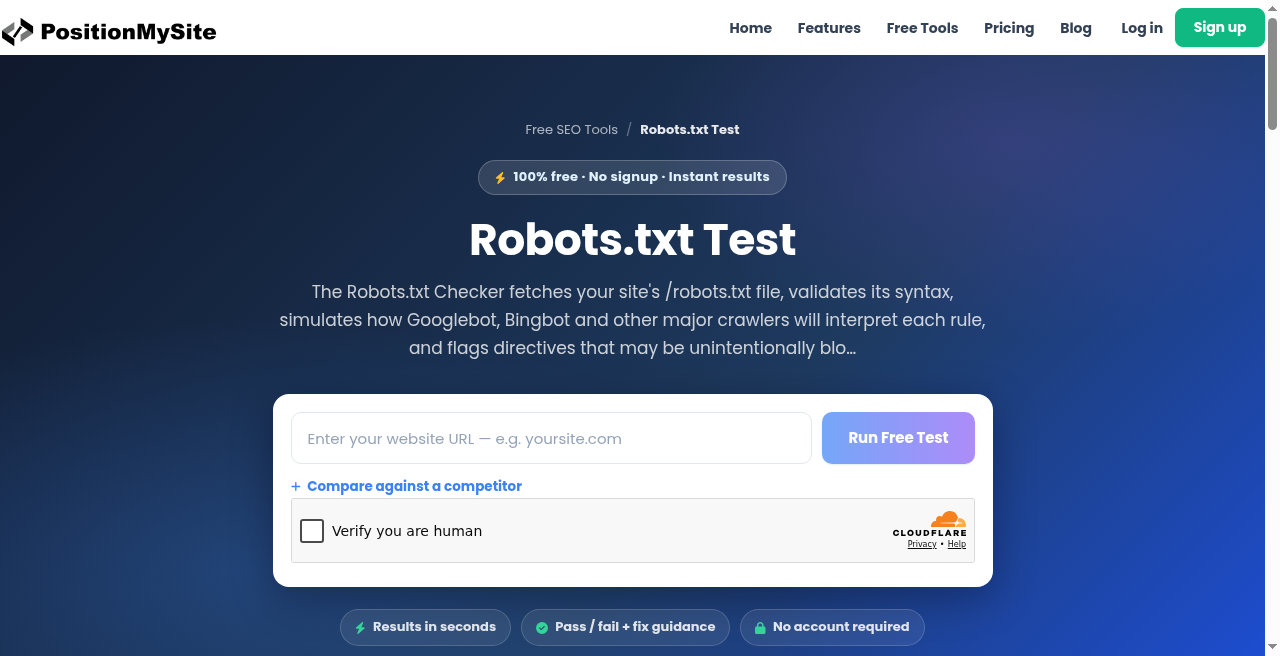
Open https://tools.positionmysite.com/tools/robots-txt, paste a live URL, and run the check. The tool fetches /robots.txt, validates syntax, and simulates how major crawlers interpret Allow and Disallow rules. You want a 200 response, no accidental full-site block, crawlable CSS and JS, and a Sitemap line with an absolute URL when you publish a sitemap.
Use the report to answer three questions in order:
- Is production still shipping a staging block?
- Do Googlebot and Bingbot share the same catastrophic rule, or is only one agent clipped?
- Are AI-specific user-agents (including Applebot-Extended) documented on purpose, or copied from a blog template you never reviewed?
If the answer to (1) is yes, fix that before you touch Apple Intelligence policy. If (3) is copied, write the intent down: allow training, disallow training, or defer until legal signs off. Do not hide that decision inside a pile of unrelated Disallows.
Separate Search crawl from AI training crawl
A practical split looks like this:
- Search crawlers (Googlebot, Bingbot, Applebot for Search): keep rules minimal. Block admin, internal search, and true junk. Do not use robots.txt as a substitute for noindex on thank-you pages.
- AI training / extended agents (Applebot-Extended and peers): decide per product and risk. Apple new line means those rules are not a Search ranking control. Measure them as access policy, not as an SEO experiment.
When you need to keep a URL out of an index, prefer a crawlable page with a noindex directive over a robots.txt hide. Robots.txt can stop a bot from fetching the page, which also stops it from seeing noindex. That mix still causes why-is-this-still-indexed tickets.
What to do after the report
1. Fix any production Disallow that blocks the whole site or critical assets.
2. Confirm the Sitemap declaration matches the file you submit in Search Console.
3. Document Applebot-Extended (and other AI agents) in your crawl policy note so the next deploy does not paste a viral robots.txt gist.
4. Re-run the Robots.txt Test after the change, then spot-check a money URL with the related sitemap and noindex tools if the report flags contradictions.
If you manage many templates, move from one-URL checks into the Site Signals workspace so the same crawl signals are watched across the site instead of only the homepage.
A short checklist before you touch Applebot-Extended
Print this next to the robots.txt PR. First, confirm the live file returns HTTP 200 and is not a CDN error page. Second, search for any Disallow that covers the whole site or shared asset directories. Third, list every User-agent block you currently ship and label each one Search, AI training, or unknown. Fourth, only then add or remove Applebot-Extended lines with a one-sentence reason in the commit message.
Teams that skip that order usually ship a temporary block that survives three releases. The Apple clarification does not rescue a broken Search crawl. It only stops you from treating Applebot-Extended edits as an organic ranking experiment. Keep the free Robots.txt Test in the PR checklist the same way you keep lint: boring, fast, and required.
Bottom line
Apple clarified that Applebot-Extended rules are not a Search ranking lever. That does not make robots.txt optional. It makes your next edit more honest: keep Search crawl clean, treat AI training access as a separate policy, and verify the file you actually serve with a free robots.txt checker before the next deploy ships a one-line outage.